EV charging assessment and project management for Triad properties. We tell you what your property can actually support, run the electrical bidding on your behalf, and stay on the phone after it's switched on.
Hardware is the visible cost and rarely the decisive one. What determines whether a charging project pencils out is the electrical service you already have — and specifically whether the job triggers a service upgrade.
A service upgrade adds $20,000 to $100,000 and usually triggers sealed drawings. Knowing which side of that line your property falls on is the whole question. It is answerable up front, before you commit to anything.
Adding capacity you don't have means new service: utility coordination, new gear, sealed drawings, and a five- or six-figure line item on top of the charging equipment. Most properties don't find out which side of that line they're on until a contractor quotes it.
NEC 625.42 permits charging equipment to operate under a load management system. Applied correctly, it often lets a property add far more charging positions inside existing capacity — turning a service upgrade from a requirement into an avoidable expense.
Equipment goes offline, the installer's warranty window has closed, and whoever sold the network doesn't return calls. Ongoing support is where most charging projects quietly fail — long after the ribbon-cutting.
Every engagement starts with a conversation and a written summary. You decide how far up the ladder to go, and each step stands on its own.
A conversation about your property and what's driving the question, followed by a written one-page summary of preliminary findings.
A 5–8 page memo covering electrical capacity, candidate locations, recommended port count, a cost range at ±25%, permitting flags, incentive eligibility, and a go/no-go recommendation.
Load calculation per NEC 220 and 625, costed build scenarios, conceptual layout, a line-item estimate suitable for bidding, a vendor-neutral equipment specification, and an incentive roadmap.
Bid package, contractor solicitation, bid leveling so you're comparing the same scope, and a written recommendation.
Everything in Bid Management, plus milestone site observation, punch list, commissioning verification, and closeout documentation.
Preparation and assembly of utility and tax incentive applications, filed by the customer of record.
Supply, configuration, and commissioning of our vetted hardware and management platform, sold as a bundle with the software subscription included for an initial term. You may choose any provider.
Remote monitoring, fault response, portal administration, warranty handling, and quarterly reporting. Continues on retainer after the first year.
The Site Feasibility Review credits in full against a Full Site Assessment booked within 90 days. Portfolio pricing is available for five or more properties.
We are an authorized reseller of the charging hardware and software we recommend, sold as a bundle, and we say so up front. You're free to use any provider, and our fees don't change if you do. On the electrical work, which is the larger cost, we take no commission and no percentage — it's bid competitively on your behalf.
You should know how a vendor is paid before you take their recommendation. Here is ours, in full.
Most property managers who've done this before have a story about a charger that's been offline for months and a vendor who won't return a call. We supply the hardware and management software ourselves and support them directly, so when something stops working there's one number to call and nobody else to blame.
The electrical work is bid competitively among vetted contractors, and we take no commission, referral fee, or percentage of the installation. That part of the project is largely commodity work governed by code, and you should have three prices for it. Our fee for managing that process is flat, so it doesn't grow when the project does.
We're an authorized reseller of the charging hardware and management software we recommend, and we earn margin when you buy it from us. You're free to choose any provider, and nothing about the assessment or our fees changes if you do. What protects you is sequence: the capacity analysis and recommended configuration are finished and in your hands before any equipment proposal exists, and the specification is written so other products could satisfy it.
Four steps, in this order, for a reason. The capacity answer comes first and costs the least. Nothing gets specified, bid, or bought until you know what your property can carry.
We walk the property, read the panel schedules and utility data, and calculate what your existing service can actually support under NEC 220 and 625. You receive a written capacity analysis — including whether a service upgrade is in play — before any equipment is discussed.
Port count, placement, output levels, and load management strategy, sized to the capacity you have and the parking you have. The specification is written vendor-neutral, so it can be bid or sourced any way you choose.
We package the scope, solicit bids from vetted independent electrical contractors, level them so you're comparing identical work, and hand you a written recommendation. You hold the contract directly with the electrician. We take no percentage of it.
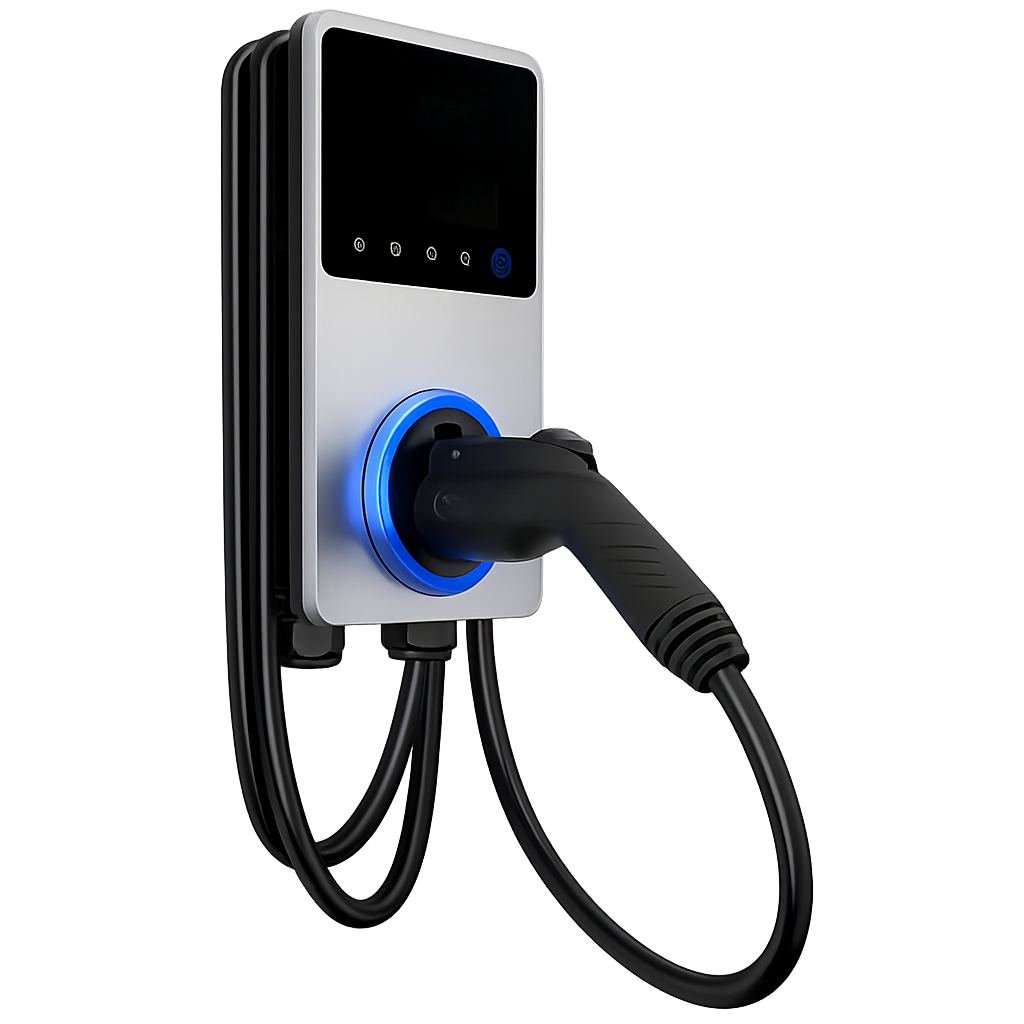
If you choose our equipment, we supply and configure the hardware and management platform and commission it on site. From there we monitor it, respond to faults, administer the portal, and handle warranty claims — directly, not through a dispatch queue.
This is the most common call we get. The units went in a few years ago, the installer has moved on, the network subscription lapsed or was never transferred into your name, and nobody at the property knows who to call.
Sometimes the hardware is fine and the account is simply orphaned. Sometimes the units were undersized for the service from day one and have been tripping ever since. Those are very different problems with very different price tags, and you can't tell them apart from the parking lot.
We assess what's actually installed and tell you plainly whether it's worth recovering or worth replacing. If it's recoverable, we take over monitoring and support. If it isn't, we'll say so before you spend anything else on it.
Identify the network the units are on, establish who controls the account, and transfer administration to the property.
Determine whether the fault is hardware, connectivity, billing configuration, or a circuit that was undersized from the start.
A straight comparison of what it costs to bring the existing units back versus what replacement would run, so the decision is yours to make on numbers.
If the equipment is worth keeping, we assume monitoring, fault response, and portal administration from wherever it stalled.
*Remote monitoring, fault response, and portal administration are included for the first year and can be extended on retainer after that.
National charging companies quote from a call center and dispatch a technician when something breaks. We're based in Winston-Salem, we walk the property ourselves, and because we ran the capacity analysis we understand your specific installation inside and out. Carolina Recharge is led by founder Daniel Black, whose electrical engineering background is what the assessment work is built on.
We don't perform electrical work, we don't bid jobs as a contractor, and we don't stamp drawings. Carolina Recharge is not a professional engineering firm and does not provide engineering services. Where a project requires drawings sealed by a professional engineer licensed in North Carolina, we identify that requirement early and refer qualified licensed professionals. Knowing exactly where our work ends — and telling you before you're committed — is part of what you're hiring us for.
We specialize in the property types that national charging companies overlook — mid-market multifamily and commercial properties in the Winston-Salem, Greensboro, and High Point area. This is our entire focus.
EV charging is becoming a top amenity for apartment renters. We help communities size infrastructure to the service they already have, so the amenity lands without a six-figure surprise attached to it.
Attracting and retaining quality tenants increasingly requires EV charging. We help suburban office owners add the amenity on a known budget, with the capacity question settled before capital is committed.
Start with a 25-minute call. We'll talk through your property and what's driving the question, then follow up with a written one-page summary of preliminary findings. No obligation, and no equipment conversation until the capacity answer is in your hands.
Your request is in. Daniel reads these directly and will follow up within one business day to schedule the 25-minute call.
Or email Daniel directly at daniel.black@carolinarecharge.com